China Best Moving Bed Biofilm Reactor Media Supplier?
Choosing the China best Moving Bed Biofilm Reactor Media supplier requires more than comparing prices or catalog photographs. A dependable evaluation should examine carrier geometry, protected surface area, HDPE quality, filling ratio, and long-term operating evidence. In a real aeration basin, small design differences affect mixing, oxygen transfer, biofilm retention, and screen performance. A carrier may look impressive in a sample tray. It still needs to perform under variable wastewater loads.
Professor Hallvard Ødegaard, a pioneer of the MBBR process, stated, “The MBBR process is based on the use of biofilm carriers.” This principle remains practical today. Media must provide stable attachment space while moving freely through the reactor. Suppliers should therefore explain their manufacturing controls, material specifications, testing methods, and installation guidance. Reliable companies can usually provide carrier dimensions, density data, surface-area definitions, and references from comparable treatment plants.
Performance evidence matters.
This article will compare Chinese suppliers through an engineering-focused lens. It will consider product consistency, customization capability, delivery reliability, technical support, and after-sales responsibility. It will also distinguish protected surface area from marketing claims, because the two figures are not always equivalent. Some suppliers may offer excellent media but limited process guidance. Others may communicate well yet lack convincing field data. That is an uncomfortable limitation. No single supplier is automatically best for every municipal or industrial application. Careful buyers should request samples, inspect production details, and verify results before making a final decision.
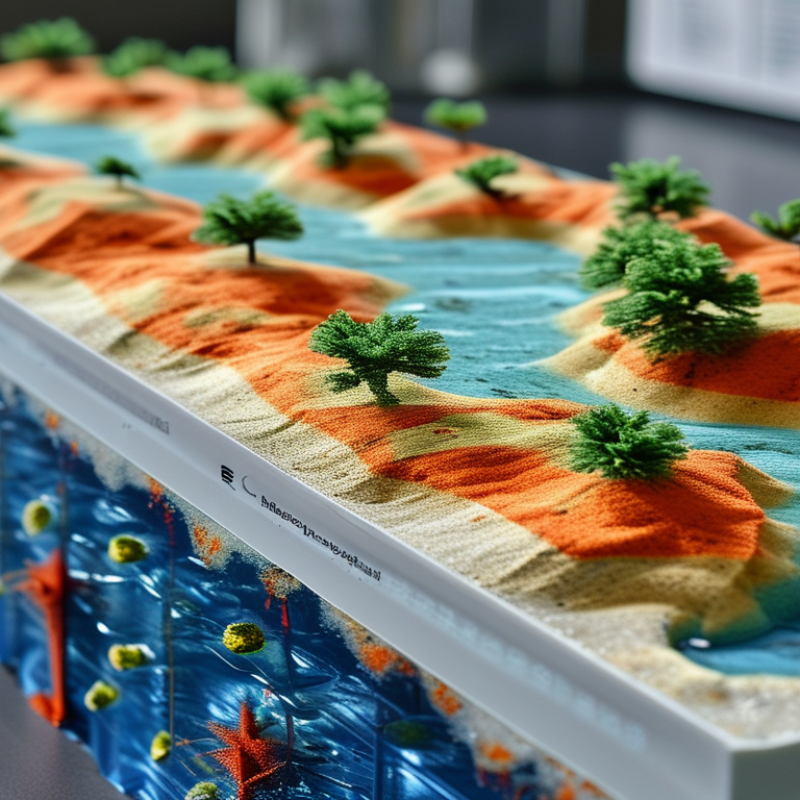
MBBR Media Fundamentals: Biofilm Surface Area of 300–1,200 m²/m³
China Best Moving Bed Biofilm Reactor Media Supplier?
MBBR media performance begins with biofilm surface area, commonly ranging from 300 to 1,200 m²/m³. This figure needs careful interpretation. Manufacturers may report total, protected, or effective surface area. These values are not interchangeable. In practical wastewater systems, protected surface area often matters more because microorganisms need stable attachment zones. A media cube or carrier with internal cavities can shelter biofilm from excessive turbulence and scouring.
During projects, I compare media geometry, density, buoyancy, and fill ratio before reviewing catalog numbers. A reactor filled to 40–60% may provide different mixing conditions than one filled near its design limit. Organic loading, ammonia concentration, dissolved oxygen, temperature, and alkalinity also change biofilm development. Surface area alone cannot guarantee treatment capacity. It is only one part of the biological design.
Ask suppliers for independent test methods, batch dimensions, material data, and measured effective surface area. Request pilot results using wastewater similar to the intended application. Clear evidence matters. A reliable supplier should explain measurement limits instead of promising perfect removal. I have seen attractive media figures perform poorly when aeration was weak or the fill ratio was poorly selected. That experience deserves attention. A lower stated area may sometimes deliver better results through stronger retention, stable movement, and easier cleaning. Supplier evaluation should include production consistency, technical support, and traceable quality records.
MBBR Media Fundamentals: Biofilm Surface Area of 300–1,200 m²/m³
MBBR media are commonly classified by their nominal protected or available biofilm surface area. Higher-surface-area media provide more attachment space per cubic metre, but actual treatment performance also depends on fill ratio, carrier movement, oxygen transfer, loading, temperature, and biofilm thickness. The values shown represent typical engineering ranges rather than brand-specific product data.
Key Performance Metrics: 40–70% Recommended Media Fill Ratio
China Best Moving Bed Biofilm Reactor Media Supplier?
Key Performance Metrics: 40–70% Recommended Media Fill Ratio
A 40–70% media fill ratio is a practical starting range for MBBR design. It describes the carrier volume compared with the reactor’s working volume. For example, a 100-cubic-meter tank may contain 40–70 cubic meters of media. The remaining space supports water circulation, oxygen transfer, and carrier movement. It is not magic.
In practical design reviews, the lower range often suits moderate organic loading and limited aeration capacity. Higher filling can provide more protected biofilm area, but it also increases mixing resistance. Fine-bubble diffusers must distribute air across the tank floor. Poor distribution can leave carriers floating in quiet corners. That weakens treatment performance, even when the calculated ratio appears correct.
Media geometry, density, and protected surface area also matter. Two products with the same fill percentage may deliver different biological capacity. Operators should check ammonia, COD, dissolved oxygen, and suspended solids during commissioning. A useful dissolved oxygen range depends on the process, but unstable readings deserve attention. Measure twice. Adjust slowly.
A 70% fill ratio may sound efficient, yet overloaded tanks can experience uneven movement and higher power demand. A 40% ratio may underperform when influent loading rises unexpectedly. Design decisions should follow measured loading, temperature, airflow, and required effluent quality. Small-scale trials can reveal problems before full installation. The calculation is simple; the biology is less forgiving.
China Supplier Evaluation: Material, Density, and ISO 9001 Quality Control
China Best Moving Bed Biofilm Reactor Media Supplier?
China Supplier Evaluation: Material, Density, and ISO 9001 Quality Control
China’s best MBBR media supplier should be judged by evidence, not a polished catalogue. Material selection starts with polymer identity. Virgin HDPE usually offers stable buoyancy, impact resistance, and chemical tolerance in biological tanks. Typical density is about 0.94–0.97 g/cm³, below water’s 1.00 g/cm³. That difference keeps carriers moving, but density alone does not prove performance. Actual biofilm area, protected surface, and filling ratio require laboratory and site records.
Industry design guidance, including Germany’s DWA-M 277, treats protected surface area and reactor loading as separate values. That distinction matters. Some supplier sheets advertise 500–800 m²/m³, yet omit the tested effective area. Ask for batch density, dimensions, thickness, raw-material grade, and independent test methods. UN-Water’s World Water Development Report 2017 estimated that over 80% of global wastewater was discharged without treatment. Demand is real, but rushed procurement creates avoidable operating risk.
ISO 9001 is useful when applied operationally. The ISO Survey 2022 recorded more than 1.2 million ISO 9001 certificates worldwide. However, certification does not automatically validate carrier geometry or nitrification results. Request the certificate scope, calibration records, incoming inspection rules, and corrective-action logs. Trace one production lot from resin receipt to packed cartons. Check random samples yourself. A damaged edge or inconsistent hole pattern may reveal more than a sales presentation. One weakness remains: many evaluations compare price before verified effective area. That habit deserves reconsideration.
MBBR Design Criteria: Oxygen Transfer and 0.5–1.5 mm Biofilm Thickness
China Best Moving Bed Biofilm Reactor Media Supplier?
MBBR Design Criteria: Oxygen Transfer and 0.5–1.5 mm Biofilm Thickness
A reliable MBBR design starts with oxygen demand, not media volume. The aeration system must supply oxygen for carbon removal and nitrification. Dissolved oxygen usually needs close control near the carrier surface. Many aerobic systems operate around 2 mg/L, but the actual target depends on temperature, loading, and effluent limits. Fine bubbles can improve transfer efficiency. However, excessive airflow may create unnecessary shear and power consumption. Uneven mixing is a common field problem. Dead zones can leave media underused.
Biofilm thickness between 0.5 and 1.5 mm often supports a useful balance. Thin films may lack enough organisms during peak loading. Thick films can restrict oxygen penetration and develop weak inner layers. Carrier movement, fill ratio, and surface texture influence this thickness. Operators should check ammonia trends, dissolved oxygen, and sludge fragments together. A clean-looking tank does not prove stable treatment. Microscopic inspection can reveal overgrowth or poor attachment. Results may differ between pilot testing and full-scale operation. That difference deserves attention. Conservative sizing, staged airflow control, and measured adjustment are safer than relying on catalog values alone.
Supplier Comparison: Testing Data, Production Capacity, and Export Compliance
China Best Moving Bed Biofilm Reactor Media Supplier?
A reliable supplier comparison should begin with testing data, not product photographs. WEF biological treatment guidance commonly uses 40–70% carrier filling ratios, depending on loading and reactor design. Suppliers should disclose media density, protected surface area, void fraction, and biofilm retention results. Independent laboratory reports matter. Ask for batch samples, not only catalog figures. A 2022 review in Water Research reported that carrier geometry and surface development strongly influence nitrification stability, especially under changing ammonia loads. Results may differ.
Production capacity needs physical evidence. Request monthly output records, extrusion-line details, mold numbers, and lot traceability. A factory claiming 10,000 cubic meters monthly should explain warehouse space, inspection staffing, and delivery schedules. Check tensile strength and abrasion data after simulated mixing. WEF MOP guidance emphasizes process verification because laboratory performance cannot fully predict full-scale operation. That warning is easy to overlook. Supplier audits can also reveal inconsistent hole dimensions, uneven cutting, or recycled polymer content. These defects may increase clogging risk.
Export compliance should include a current SDS, material declaration, certificate of origin, and accurate HS classification. For European shipments, review REACH and CLP obligations where applicable. Packaging should meet destination-country rules, with clear batch labels and moisture protection. ISO 9001 certification supports process control, but it does not prove biological performance. I would still request third-party test results, recent shipping records, and corrective-action reports. No supplier is flawless. The strongest choice is the one that documents weaknesses openly.
China Best Moving Bed Biofilm Reactor Media Supplier? - Supplier Comparison: Testing Data, Production Capacity, and Export Compliance
| Supplier Code |
Media Type |
Nominal Size
(mm) |
Density
(g/cm³) |
Protected Surface Area
(m²/m³) |
Recommended Fill Ratio
(%) |
COD Removal
(%) |
Ammonia-N Removal
(%) |
Declared Capacity
(m³/month) |
Typical Lead Time
(days) |
Quality and Export Documentation |
Overall Readiness |
| Supplier A |
HDPE cylindrical carrier |
25 × 10 |
0.95–0.97 |
500–650 |
40–60 |
75–88 |
80–94 |
1,000–1,500 |
15–25 |
Batch inspection report, material declaration, commercial invoice, packing list, certificate of origin, HS-code support |
High |
| Supplier B |
HDPE wheel-shaped carrier |
20 × 20 |
0.94–0.96 |
550–750 |
40–70 |
72–86 |
78–92 |
800–1,200 |
20–30 |
ISO 9001-based quality procedures, lot traceability, material safety declaration, export invoice and packing documentation |
Good |
| Supplier C |
HDPE media with internal ribs |
25 × 15 |
0.96–0.98 |
600–800 |
50–70 |
78–90 |
84–96 |
1,500–2,500 |
20–35 |
Production inspection records, polymer identification, dimensional report, certificate of origin, customs classification support |
High |
| Supplier D |
PE/PP hybrid biofilm carrier |
30 × 12 |
0.92–0.96 |
450–650 |
40–60 |
70–84 |
74–90 |
500–900 |
25–40 |
Basic quality certificate, product specification sheet, commercial invoice, packing list and standard export declaration |
Medium |
| Supplier E |
HDPE flat-sheet carrier |
35 × 15 |
0.95–0.97 |
500–700 |
50–70 |
76–88 |
80–93 |
2,000–3,000 |
15–30 |
Incoming and final inspection records, batch coding, polymer declaration, certificate of origin and full shipping documents |
High |
|
Evaluation notes: Surface-area values should be verified by the supplier's stated test method, such as BET or geometric calculation. COD and ammonia-nitrogen removal rates depend on reactor volume, temperature, dissolved oxygen, influent concentration, sludge age, carrier fill ratio, and biofilm maturity; they are not directly comparable unless test conditions are identical. Export compliance should be confirmed against the destination country's customs, chemical, packaging, and product-safety requirements before purchase.
|

 +86 13600513715
 CONTACT NUMBER
 CONTACT NUMBER