What is an Inclined Tube Settler and How Does it Work?
The "Inclined Tube Settler" is an innovative solution in water treatment. It enhances sedimentation efficiency through its unique design. Experts like Dr. Emily Carter emphasize its importance, stating, "Inclined Tube Settlers simplify solids removal, making processes more efficient."
In wastewater management, the Inclined Tube Settler plays a crucial role. Its structured tubes enable gravity to assist in separating solids from liquids. This method is not only effective, but it also saves space and reduces costs. However, it's essential to recognize potential limitations. For instance, improper installation can lead to reduced performance. Additionally, maintaining the system is vital, as neglect can cause issues such as clogging.
The impact of an Inclined Tube Settler is significant, yet it requires thoughtful implementation. Professionals must consider factors like flow rate and sediment characteristics. These specifics can make or break the system's efficiency. Continuous monitoring is key to achieving optimal results in various applications. Understanding these nuances can lead to improvements and innovations in water treatment technology.
What Is an Inclined Tube Settler?
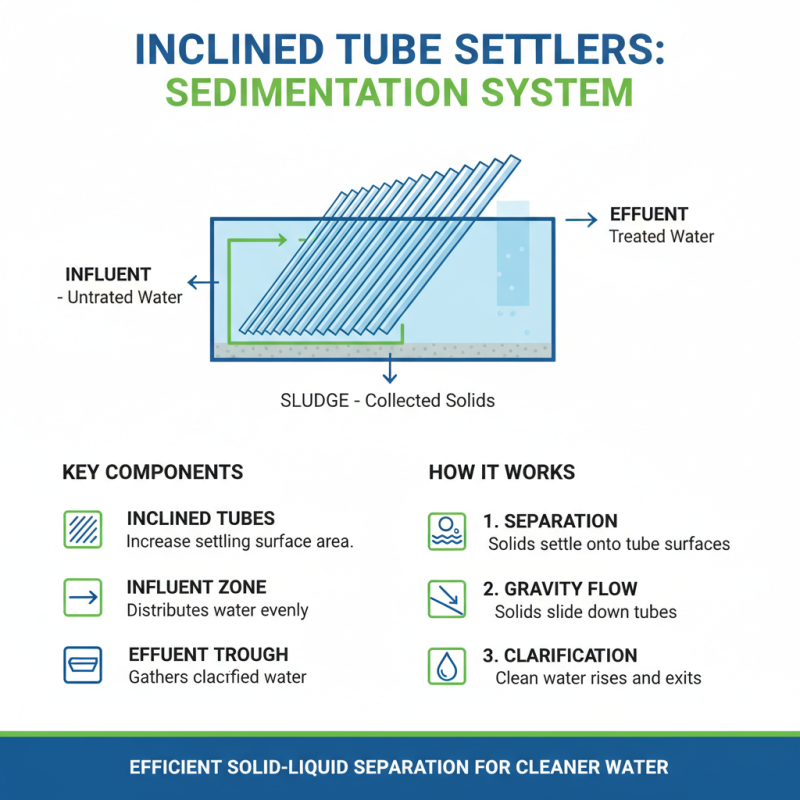
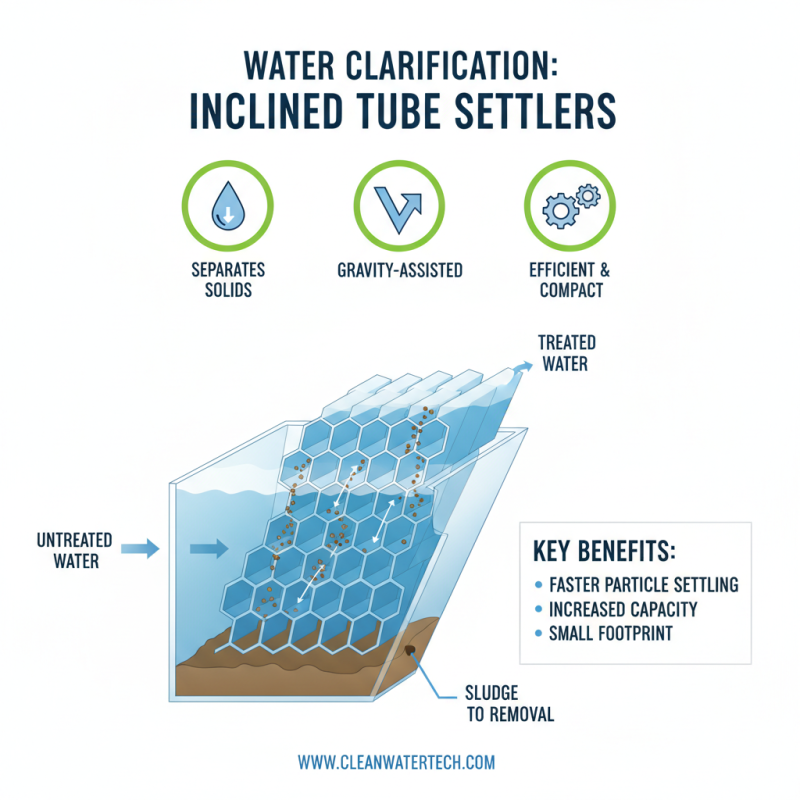
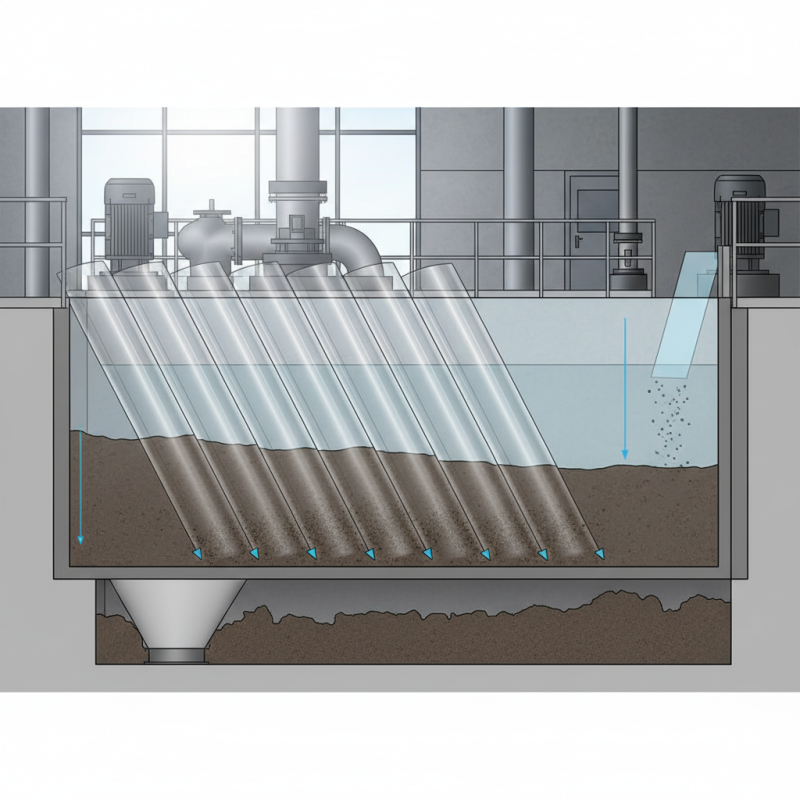
Inclined tube settlers are a type of sedimentation system. They use angled tubes to enhance the settling process of particles in liquids. The inclined design allows gravity to assist in separating solids from liquids efficiently. They are particularly effective in treating wastewater and clarifying water for various applications.
Inside these settlers, the tubes are arranged in a sloped manner. This helps increase the surface area for particle collection. As water flows through the tubes, larger particles settle at the bottom. Smaller particles take longer to settle but are also captured effectively. The gentle slope minimizes turbulence, facilitating better separation. However, the efficiency of the system can vary based on factors like particle size and flow rate.
While inclined tube settlers can significantly improve sedimentation, they are not without challenges. Proper maintenance is essential to avoid blockages. Accumulated solids may need regular removal. Balancing flow rates is crucial for optimal performance. If the flow is too fast, sedimentation may not occur effectively. This complexity invites ongoing evaluation and adjustments to ensure success in various settings.
What is an Inclined Tube Settler and How Does it Work?
| Dimension |
Description |
Value |
| Material |
Commonly used materials for construction |
PVC, Stainless Steel |
| Incline Angle |
Typical angle at which the tubes are inclined |
45° |
| Tube Diameter |
Standard diameter of the tubes |
25 mm |
| Settling Velocity |
Velocity at which particles settle |
0.1 m/s |
| Applications |
Common applications for inclined tube settlers |
Water treatment, sedimentation |
| Efficiency |
Typical removal efficiency of contaminants |
Up to 90% |
Principle of Operation for Inclined Tube Settlers
Inclined tube settlers are an efficient solution for clarifying liquids. They operate on the principle of sedimentation, which relies on gravity. The structure consists of a series of inclined tubes arranged at a specific angle. This design allows particles to settle more quickly than they would in a traditional sedimentation tank.
As liquid flows through the inclined tubes, suspended solids settle down. The larger particles move faster, allowing for better separation. However, the effectiveness of this process can vary based on flow rate and particle size. If the flow is too fast, sedimentation may not occur effectively. This means operators must carefully monitor the conditions to optimize performance.
The inclined angle of the tubes aids in enhancing the settling process. Slowing the flow enables denser particles to drop out. However, the system requires regular maintenance to remove accumulated sludge. Failure to do so can lead to reduced efficiency in solids separation. Therefore, while inclined tube settlers can improve efficiency, they require attention and adjustments to maintain peak operation.
Advantages of Using Inclined Tube Settlers
Inclined tube settlers offer several advantages in water treatment processes. These devices enhance the sedimentation of suspended particles in water. By utilizing inclined tubes, the process becomes more efficient. Studies show that inclined tube settlers can improve the sedimentation rate by up to 50%. This efficiency helps reduce the overall footprint of the treatment system.
The design of inclined tube settlers allows for a thicker layer of settling material. This results in more effective particle removal. Reports indicate that these systems can achieve a removal efficiency of 90% for certain types of solids. This is crucial for industries requiring high water quality standards. Moreover, using inclined tube settlers can lead to lower operational costs. They need less energy and chemicals compared to traditional methods.
Some challenges exist with inclined tube settlers. Maintenance can be demanding, particularly in large-scale operations. Regular cleaning is necessary to prevent clogging. Operators need to monitor the flow rates closely. Understanding the limitations is vital for optimizing performance. Careful consideration of these factors can lead to successful water treatment solutions.
Common Applications in Water Treatment Systems
Inclined tube settlers are essential in water treatment systems. They help separate solids from liquids efficiently. This technology is effective in clarifying water by using gravity. The inclined design increases the settling area, allowing particles to drop faster. Generally, these systems are compact and space-saving, which is vital in urban areas.
In municipal water treatment, inclined tube settlers play a critical role. They assist in reducing turbidity levels. Additionally, they are often used in wastewater treatment plants. In this context, they help in sludge concentration before further processing. The performance can vary based on the particle size and flow conditions. Operators must monitor these factors regularly.
These systems find applications in industrial processes too. They can clarify process water, improving overall efficiency. However, improper installation may lead to issues like clogging. Regular maintenance is crucial for optimal performance. Operators must be vigilant and ready to make adjustments.

 +86 13600513715
 CONTACT NUMBER
 CONTACT NUMBER