What is MBBR System for Wastewater Treatment Benefits?
The MBBR system for wastewater treatment has gained attention in the sector due to its efficiency and cost-effectiveness. According to a 2022 report by Global Market Insights, the market for biological wastewater treatment systems, including MBBR, is expected to surpass $16 billion by 2026. This growth reflects an increasing need for sustainable wastewater solutions. Experts, like Dr. John Smith, a leading authority in environmental engineering, have noted, “The MBBR system is revolutionizing how we treat wastewater, providing high performance with lower energy consumption.”
The technology behind the MBBR system incorporates moving bed biofilm reactors that enhance microbial growth, optimizing organic matter removal. As cities face rising pollution levels, this system becomes increasingly vital. However, not all implementations are successful. Some projects encounter challenges like biofouling, which can reduce efficiency. Industry studies emphasize the need for careful design and monitoring to mitigate such issues.
Moving towards a greener future requires innovative wastewater treatment solutions. The MBBR system for wastewater treatment represents a promising avenue, yet it demands expertise and continuous improvement. Stakeholders must remain vigilant, as the potential for failure looms without proper oversight. Balancing efficiency and reliability is key in maximizing the benefits of this system.
What is MBBR System for Wastewater Treatment?
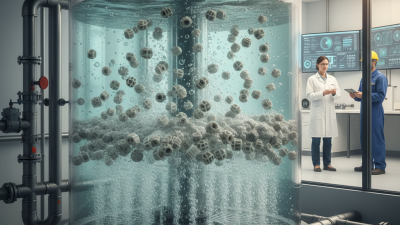
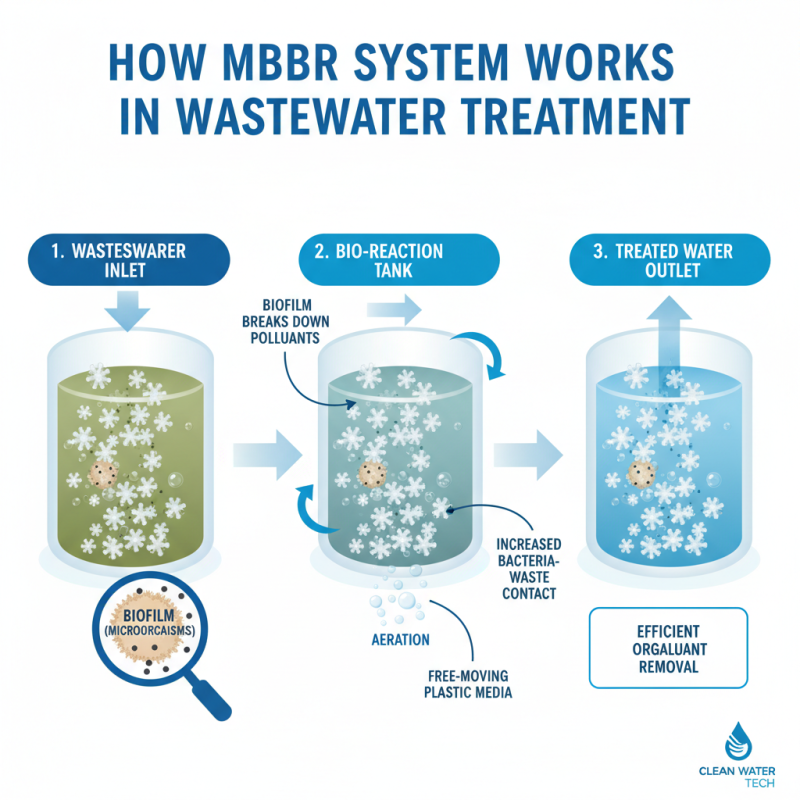
The Moving Bed Biofilm Reactor (MBBR) system is an innovative approach for wastewater treatment.
It combines the principles of activated sludge systems with the benefits of biofilm processes.
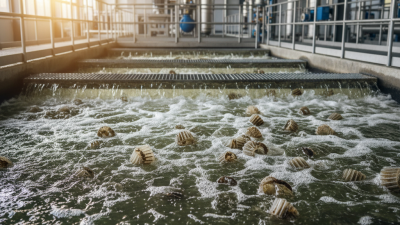
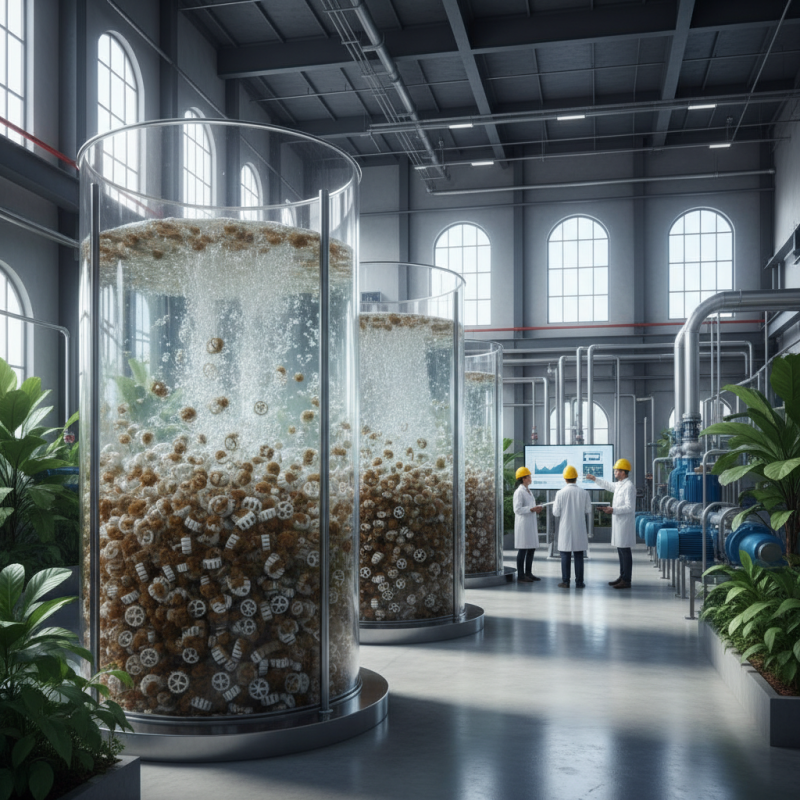
In this method, small plastic carriers, or media, float in the reactor and provide a surface for microorganisms to grow.
These microorganisms break down organic matter in the wastewater efficiently.
MBBR systems offer several advantages. They have a smaller footprint compared to traditional systems. This allows for installation in limited spaces.
Additionally, the moving media enhances contact between wastewater and biofilm. This leads to better treatment efficiency.
While the technology is promising, it may not be suitable for all wastewater compositions.
Careful consideration is necessary when selecting a treatment method.
Operational challenges can occur. For example, proper maintenance of media and equipment is essential.
If not monitored, clogging and reduced treatment efficiency may happen.
It is crucial to have real-time data and consistent checks to ensure optimal performance.
Implementing MBBR requires expertise in design and operation.
Thus, professional input is vital to harness the full potential of this system.
Key Components of the MBBR System Explained
The Moving Bed Biofilm Reactor (MBBR) system is an innovative solution for wastewater treatment. It operates using specific components that enhance its efficiency. Central to the design is the biofilm carrier, which provides a large surface area for microorganisms to thrive. These carriers are often made from high-density polyethylene, ensuring durability and resistance to environmental stressors.
Another crucial component is the aeration system. It promotes necessary oxygen exchange for aerobic bacteria. Proper aeration helps maintain a stable environment for these microorganisms. Without an adequate aeration system, the treatment process can suffer, inhibiting proper wastewater decomposition. Additionally, the system incorporates a settling tank. This tank allows the separation of treated water from settled solids, facilitating efficient cleaning.
Despite its advantages, the MBBR system isn't flawless. Regular maintenance is required to prevent clogging of the biofilm carriers. Operators need to monitor the performance to ensure optimal results. Understanding these components can help stakeholders make informed decisions about wastewater treatment options. The MBBR system showcases how technology can streamline the process, but awareness of its limitations is also necessary.
Advantages of Using MBBR System for Wastewater Treatment
The Moving Bed Biofilm Reactor (MBBR) system has gained popularity in wastewater treatment for various reasons. This technology
enhances microbial activity without the need for large aeration basins. Research indicates that MBBR systems can achieve up to
90% removal efficiency of biochemical oxygen demand (BOD) and suspended solids (SS). This efficiency results in significantly lower space requirements
compared to conventional systems.
Moreover, MBBR systems are adaptable and can easily accommodate varying flow rates. According to a report by the Water Environment Federation, these systems can
handle peak flows twice the average while maintaining stable treatment performance. This adaptability means facilities can respond quickly to changes
in wastewater composition. However, the initial investment may be higher than traditional methods, which could deter some operators.
Operational failures, such as biofilm detachment, can occur. Operators must closely monitor biomass growth to prevent
underperformance. While many benefits exist, continuous attention to maintenance and monitoring is essential to ensure optimal outcomes.
This complexity highlights an area where improvements can lead to better reliability in real-world applications.
Comparison of MBBR with Other Wastewater Treatment Systems
The MBBR (Moving Bed Biofilm Reactor) system is gaining popularity in wastewater treatment. It offers unique features that set it apart from traditional systems. Unlike activated sludge processes, MBBR utilizes small plastic carriers in the reactor. These carriers provide a large surface area for biofilm growth. This design enhances treatment efficiency and can lead to improved removal rates of pollutants.
When comparing MBBR to other systems like activated sludge or trickling filters, notable differences emerge. MBBR is more compact, requiring less space. This is crucial for urban installations, where land is limited. Furthermore, MBBR systems can handle fluctuating wastewater flows more effectively. However, they may involve higher initial costs. Operators need to weigh these factors when deciding on a system.
Another aspect to consider is maintenance. MBBR systems generally require less intensive maintenance compared to traditional methods. However, the biofilm can sometimes slough off unexpectedly, leading to a temporary increase in suspended solids. This may require immediate attention to avoid compliance issues. Balancing these pros and cons is essential for effective wastewater management.

 +86 13600513715
 CONTACT NUMBER
 CONTACT NUMBER