 +86 13600513715
Leave Your Message
-
CONTACT NUMBER
-
 CONTACT NUMBER
 -
 CONTACT NUMBER
Buying a Moving Bed Bioreactor is not simply a matter of comparing tank volume and quoted prices. Global buyers must connect biological performance with site conditions, operator skills, shipping limits, and long-term service. A reactor that performs well in a supplier’s demonstration hall may behave differently with local wastewater, seasonal temperatures, or inconsistent loading.
Small details matter. Ask how the carrier media is retained, how aeration is controlled, and how media movement is monitored. Review oxygen-transfer data under realistic operating conditions, not only laboratory figures. Confirm material grades, access points, inspection records, and cleaning requirements before signing a purchase agreement. These checks can reveal costly gaps early.
The seven buying tips in this guide focus on practical decisions that affect reliability and ownership costs. They cover process suitability, supplier experience, customization, documentation, installation support, maintenance, and warranty clarity. Experienced buyers should also examine references from facilities with similar flow rates and wastewater characteristics. A polished brochure is not enough. Request operating data.
No checklist is flawless.
A lower initial price may hide freight costs, replacement media, control-system limitations, or delayed technical support. Regional standards and import requirements may also influence the final design. Buyers should therefore compare complete lifecycle value, not equipment price alone. Careful questions, documented assumptions, and a realistic acceptance test create a stronger basis for purchasing a Moving Bed Bioreactor with confidence. Mistakes can still happen, but they become easier to identify and manage.
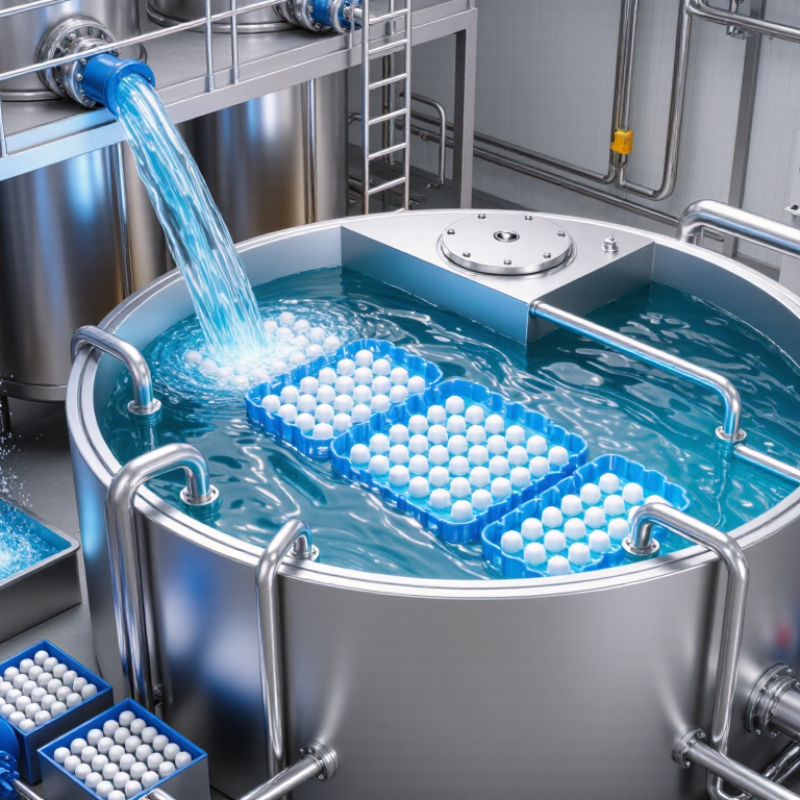
Before buying a moving bed bioreactor, define the treatment target with measured data. Identify influent flow, peak flow, COD, BOD, ammonia, nitrogen, phosphorus, temperature, salinity, and suspended solids. Do not rely only on average values. Morning and weekend loads can differ sharply.
The operating conditions must match the biological process. Check the required hydraulic retention time, dissolved oxygen range, alkalinity, pH, and carrier fill fraction. Also confirm the available tank volume and blower capacity. A system may meet the daily flow but fail during short peak events. I have seen designs become unstable because cold-weather performance was estimated too generously. This deserves careful review.
Tips: Request at least several days of representative sampling. Include wet-weather data when applicable. Ask the supplier to explain sizing assumptions in writing. Compare actual oxygen demand with installed aeration capacity. Confirm how operators will monitor ammonia and dissolved oxygen. A small pilot test can reveal foaming, poor mixing, or carrier loss before full installation. It costs time, but it can prevent expensive modifications. Do not ignore maintenance access. Screens, blowers, and retention grids need practical inspection points. One overlooked detail can become a daily problem. Recheck every calculation against local discharge requirements and the operator’s actual experience.
| Buying Tip | Key Design Dimension | Typical Planning Data | Why It Matters | Information to Confirm Before Purchase |
|---|---|---|---|---|
| 1. Define the treatment objective | Pollutants and discharge limits | Common targets include BOD5 below 10–30 mg/L, COD below 50–125 mg/L, NH4-N below 1–10 mg/L, and total nitrogen below 10–20 mg/L. Actual limits depend on the receiving environment and local regulations. | An MBBR configured for carbon removal may require different reactor volume, aeration, carrier fill, and operating controls than a system designed for nitrification or nitrogen removal. | Permitted limits, sampling method, seasonal limits, peak-flow requirements, reuse requirements, and whether tertiary filtration or disinfection is also required. |
| 2. Characterize influent quality and variability | Flow and pollutant loading | Record average, maximum-day, and peak-hour flow. Measure BOD5, COD, TSS, NH4-N, total nitrogen, alkalinity, temperature, pH, salinity, and toxic or inhibitory compounds. For preliminary sizing: load (kg/day) = flow (m3/day) × concentration (mg/L) ÷ 1,000. | Biological reactors are affected by shock loads, dilution, seasonal temperature changes, grease, heavy metals, solvents, and disinfectants. Average values alone can produce an undersized system. | At least 7–14 days of representative sampling where possible, including wet-weather flow, production changes, holiday conditions, and industrial batch discharge data. |
| 3. Select carrier fill and protected surface area carefully | Carrier volume and biofilm attachment area | Typical carrier fill is approximately 30–70% of the biological reactor volume. Protected or effective surface area often falls broadly within 300–800 m2/m3, depending on carrier geometry and the supplier’s test method. | Higher fill and surface area can increase treatment capacity, but excessive fill may restrict mixing, increase head loss, and raise aeration demand. “Effective surface area” should not be confused with total geometric area. | Carrier dimensions, density, filling limit, protected surface-area test method, retention-screen opening size, abrasion resistance, buoyancy, and replacement policy. |
| 4. Match operating conditions to the biological process | Dissolved oxygen, pH, temperature, and alkalinity | Aerobic carbon removal commonly operates around 1.5–3.0 mg/L DO; nitrification commonly requires about 2.0–4.0 mg/L DO. A practical pH range is approximately 6.5–8.5. Nitrification consumes about 7.14 mg of alkalinity as CaCO3 per mg of NH4-N oxidized. | Low temperature slows biological kinetics, while inadequate alkalinity can reduce nitrification and cause pH depression. Excessive DO increases energy consumption without necessarily improving removal. | Minimum design temperature, oxygen-transfer performance at site altitude, alkalinity balance, pH control, chemical dosing needs, and expected salinity or temperature extremes. |
| 5. Verify hydraulic retention and loading assumptions | HRT, volumetric loading, and stage configuration | Municipal MBBR hydraulic retention time is often approximately 2–8 hours for carbon removal and may be longer for cold-weather nitrification or stringent nitrogen limits. Final sizing must be based on process modelling, temperature, loading, and effluent targets. | A single-stage reactor may not provide adequate conditions for simultaneous carbon removal, nitrification, and denitrification. Multiple aerobic and anoxic stages can improve process control. | Design flow range, peak hydraulic rate, recycle requirements, anoxic volume, internal mixing, bypass arrangements, minimum turndown, and provisions for future capacity expansion. |
| 6. Evaluate aeration, mixing, and energy demand | Airflow, oxygen transfer, and power supply | Aeration must cover biological oxygen demand, endogenous respiration, and mixing. Fine-bubble systems can provide higher oxygen-transfer efficiency than coarse-bubble systems, but actual performance depends on water depth, fouling, temperature, altitude, and diffuser condition. | Blower capacity and control range directly affect treatment stability and operating cost. Insufficient mixing can cause carrier settlement or uneven biofilm exposure. | Site elevation, electrical frequency and voltage, blower redundancy, variable-frequency drives, diffuser material, noise limits, standby power, maintenance access, and expected kWh per m3 treated. |
| 7. Check pretreatment, compliance, and lifecycle support | Screening, clarification, monitoring, and maintenance | Fine screening is normally required to protect carrier-retention screens and air equipment. Online monitoring commonly includes DO, pH, temperature, flow, and blower pressure; ammonia, nitrate, and oxidation-reduction potential may be added for nutrient removal control. | Reliable pretreatment reduces clogging and mechanical damage. Instrumentation, access, spare parts, and operator training often determine long-term performance more than the reactor tank alone. | Screen opening, solids and grease limits, cleaning frequency, inspection ports, drain-down arrangements, calibration requirements, spare-parts availability, documentation, local service capability, and warranty conditions. |